Showing posts with label dengue mosquito. Show all posts

Friday, October 14, 2011

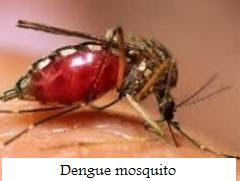
Dengue mosquito

dengue mosquito life cycle picture
dengue mosquito
dengue mosquito
dengue mosquito
dengue mosquito
dengue mosquito
dengue mosquito

Monday, July 18, 2011

dengue mosquito mostly dengerous

SANTO DOMINGO, Dominican Republic (AP) — Thousands of health workers and soldiers will destroy mosquito breeding areas across the country this weekend, worried dengue cases are on track to nearly doubled from last year, officials said Friday.

At least 27 deaths have been reported, and health officials say more than 5,000 people have been diagnosed so far in 2010 with the virus that causes fever, headaches and extreme joint and muscle pain.
More than 100,000 officials will go house by house to explain how to prevent dengue and remove any objects that could serve as breeding grounds, Health Minister Bautista Rojas said.
dengue mosquito

Last year, 11 deaths and more than 3,000 cases were reported through June.
Officials in nearby Puerto Rico plan to fumigate the island next week and warned of a dengue outbreak that could rival that of 1998, when 17,000 people became sick and 19 died in the U.S. Caribbean territory.
dengue mosquito
dengue mosquito

Tuesday, June 21, 2011

Dengue Mosquito

Dengue fever also known as breakbone fever, is an infectious tropical disease caused by the dengue virus. Symptoms include fever, headache, muscle and joint pains, and a characteristic morbilliform skin rash. Treatment of acute dengue is supportive, using either oral or intravenous rehydration for mild or moderate disease, and intravenous fluids and blood transfusion for more severe cases. The incidence of dengue fever has increased dramatically since the 1960s, with around 50–100 million people infected yearly. Dengue is currently endemic in more than 110 countries. Others have more severe illness (5%), and in a small proportion it is life-threatening. The incubation period (time between exposure and onset of symptoms) ranges from 3–14 days, but most often it is 4–7 days. Therefore, travelers returning from endemic areas are unlikely to have dengue if fever or other symptoms start more than 14 days after arriving home. They bite primarily during the day. Other mosquito species—Aedes albopictus, A. polynesiensis and several A. scutellaris—may also transmit the disease. Humans are the primary host of the virus, but it may also circulate in nonhuman primates. An infection may be acquired via a single bite. A mosquito that takes a blood meal from a person infected with dengue fever becomes itself infected with the virus in the cells lining its gut. About 8–10 days later, the virus spreads to other tissues including the mosquito's salivary glands and is subsequently released into its saliva. The virus seems to have no detrimental effect on the mosquito, which remains infected for life. The dendritic cell moves to the nearest lymph node. Meanwhile, the virus genome is replicated in membrane-bound vesicles on the cell's endoplasmic reticulum, where the cell's protein synthesis apparatus produces new viral proteins, and the viral RNA is copied. Immature virus particles are transported to the Golgi apparatus, the part of the cell where the some of the proteins receive necessary sugar chains (glycoproteins). The now mature new viruses bud on the surface of the infected cell and are released by exocytosis. They are then able enter other white blood cells (such as monocytes and macrophages).
The initial reaction of infected cells is to produce the interferon, a cytokine that raises a number of defenses against viral infection through the innate immune system by augmenting the production of a large group of proteins (mediated by the JAK-STAT pathway). Some serotypes of dengue virus appear to have mechanisms to slow down this process.


Related Posts Plugin for WordPress, Blogger...