Wednesday, August 10, 2011

Tortoise and Tortels

Galápagos Islands in the South Atlantic
Habitat: Upland areas
Size: Shell length from 29 in. (74 cm) to more than 4 ft. (1.2 m); weighs 500 lb. (227 kg)
Coloration: Dull brown; males often have a yellow area on the lower jaw and throat
Diet: Wide range of vegetation— even cactus shoots
Breeding: Females lay 2–10 eggs that hatch after 3–4. largest tortoises in the world live on the Galápagos Islands in the Pacific Ocean. These reptiles probably drifted across the ocean from Central America, perhaps on floating tree trunks. The first giant tortoises washed up on the beaches of the island of Española. Later, more giant tortoises landed on the islands of southern Isabela, Volcan Darwin, and Volcan Alcedo. A third batch of tortoises landed on other islands in the group. It may seem unlikely that tortoises could just drift across the ocean for hundreds of miles and end up on some remote islands. Yet tortoises are often carried far from land during floods and they can survive very well at sea. They stay afloat with little effort, bobbing along on the ocean waves.One female is all that is needed to start a new population of tortoises if she already carries a male’s sperm inside her body. Female tortoises can lay eggs for up to four years without a male being present.

These tortoises live on dry islands where they need to stretch up to feed on taller plants. The smaller plants on these islands die back during dry periods. Saddlebacks have long legs and long necks, so they can stretch as high as possible.
The males often make a roaring sound when they mate with the females. The females lay between two and ten hard, spherical eggs from July to December.

Saving the Tortoises!!
Many conservation programs have been set up to help the Galápagos giant tortoises. The introduction of foreign species is being controlled to prevent competition for food or danger to the eggs and young tortoises. These tortoises are also being bred in captivity. Over the last forty years, the Darwin Foundation on the Galápagos Islands have hatched more than 2,500 young tortoises, adding to a total population of about 10,000 individuals.

Friday, August 5, 2011

Knight Anole

knight anole (Anolis equestris) is a species of lizard in the Polychrotidae family, and the largest species of anole. Other common names include Cuban knight anole. It grows to a length of 13 to 20 inches (33 to 51 cm) including the tail. It is now widely introduced in South Florida where it reproduces and spreads readily.

Aggressive to anything that enters its territory, the knight anole will face almost any intruder it perceives to be a threat (from a distance). During its display, a lizard will sit high on all fours, gape menacingly, turn green, and perhaps bob its head.

the anole's aggressiveness seems to lessen to a certain degree. In communal terraria with other species of lizards it rarely attacks smaller lizards unless it is hungry.
Knight Anole pics

Tiger Salamander tiger salamander larvae & Life cycle

tiger salamanders grow to a typical length of 6–8 inches (15–20 cm). They can reach up to 14 inches (36 cm) in length, particularly neotenic individuals. Adults are usually blotchy with grey, green, or black, and have large, lidded eyes. They have short snouts, thick necks, sturdy legs, and long tails. Tiger salamanders are almost entirely terrestrial as adults, and usually only return to the water to breed. But also they partly live in both land and water. They also like to swim,even if they are terrestrial. They also are good swimmers. Like all ambystomatids, they are extremely loyal to their birthplace, and will travel long distances to reach it. However, a single tiger salamander has only a 50% chance of breeding more than once in its lifetime. Males nudge a willing female to initiate mating, and then deposit a spermatophore on the lake bottom.
Tiger Salamander populations is wetland (habitat) destruction and/or alteration. Since they tend to breed in semipermanent wetlands, larval Tiger Salamanders often experience mass mortality in association with pond drying. Introduced fishes have also been known to reduce, and levels they also experience reduced growth and longer larval periods. The effect of agricultural pesticides in endocrine disruption has also been researched. All of these issues have collectively influenced Tiger Salamander populations. However, Tiger Salamanders are only listed as endangered in Delaware, New York, New Jersey and Maryland; protected in Arizona; and of special concern in both North and South Carolina. The larvae are entirely aquatic, and are characterized by large external gills and a prominent caudal fin that originates just behind the head. Limbs are fully developed within a short time of hatching. Some larvae, especially in seasonal pools and in the north, may metamorphose as soon as feasible. These are known as small morph adults. Other larvae, especially in ancestral pools and warmer climates, may not metamorphose until fully adult size. These large larvae are usually known as waterdogs, and are used extensively in the fishing bait and pet trade.
tiger salamander
tiger salamander
tiger salamander

Thursday, August 4, 2011

skink lizards

Skinks are the most diverse group of lizards. They make up the family Scincidae which shares the superfamily or infraorder Scincomorpha with several other lizard families, including Lacertidae (the "true" or wall lizards). Several genera (e.g., Typhlosaurus) have no limbs at all; others, such as Neoseps, have only reduced limbs. Often, their way of moving resembles that of snakes more than that of other lizards. The longer the digits, the more arboreal the species is. A biological ratio exists that can determine the ecological niche of a given skink species. The SENI (Scincidae Ecological Niche Index) is a ratio based on anterior foot length at the junction of the ulna/radius-carpal bones to the longest digit divided by the snout-to-vent length (SVL. Some species are endangered, such as the Androgynous Skink in New Zealand, with less than 100 reports, since first being identified at Molesworth Station South Island by Keith Frankum.
Many species are good burrowers. There are more terrestrial or fossorial (burrowing) species than arboreal (tree-climbing) or aquatic species. Some are "sand swimmers", especially the desert species, such as the mole skink in Florida.

Breeding

Approximately 45% of skink species are viviparous. Many are ovoviviparous (hatching eggs internally and giving birth to live offspring). Some, such as the genera Tiliqua and Corucia, give birth to live young through a mammal-like placenta attached to the female – viviparous matrotrophy. The approximately 55% of skink species that are oviparous (egg-laying) give birth in small clutches.
skink lizard
skink lizard
skink lizard
skink lizard

Monday, August 1, 2011

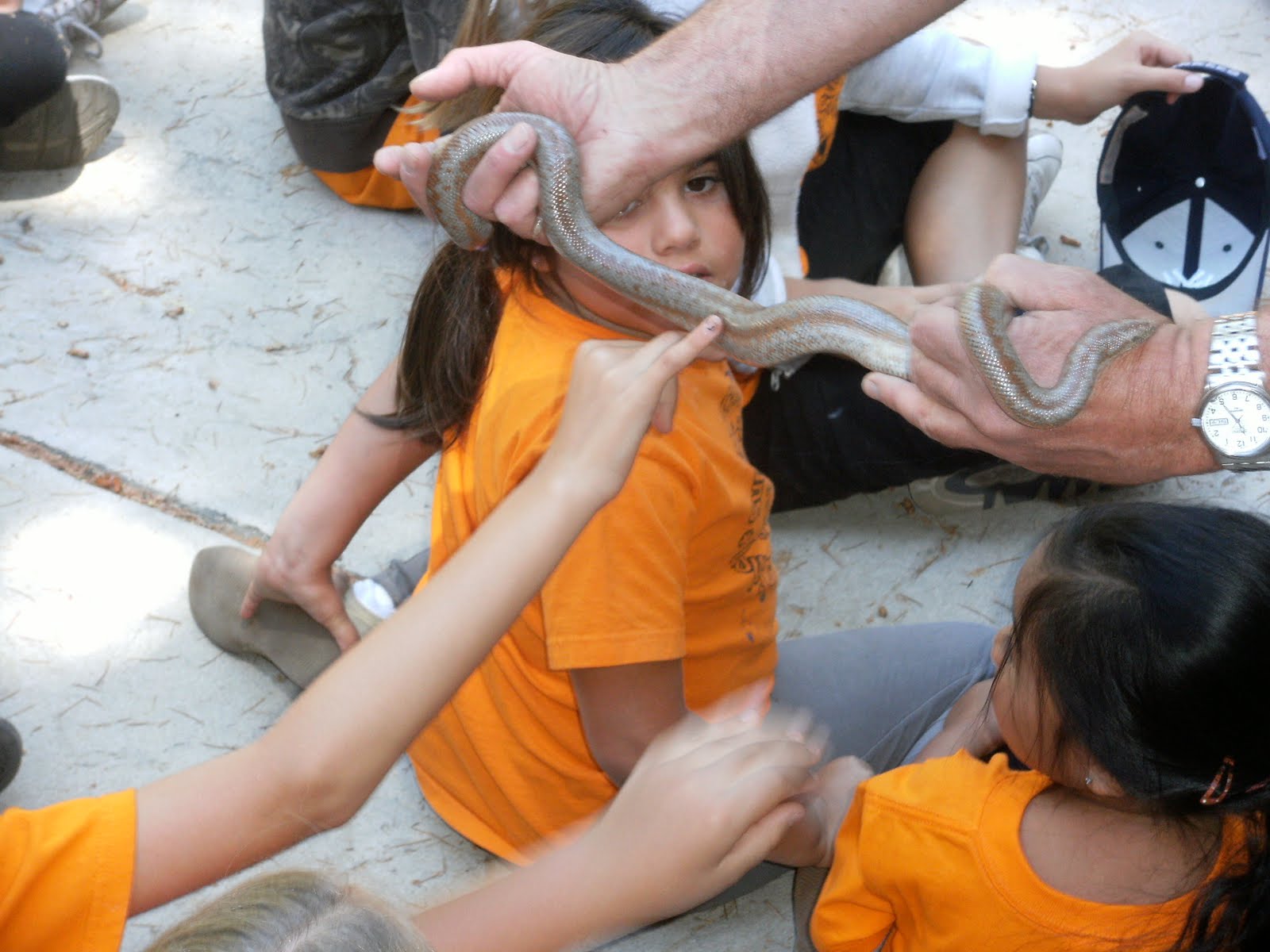
rosy boa snake pics & wallpapers

Rosy Boa (Lichanura trivirgata) is a snake of the Boidae family, one of only two members of that family native to the United States. The other is the Rubber Boa (C. bottae). Rosy Boas are native to the American Southwest, and Baja and Sonora Mexico. small attractive snakes attain a length of 39 in (1 m) (though some specimens from the coast of California reach 4 feet) and a large adult has a body width about the diameter of a golf ball. Coloration in Rosy Boas is highly variable. The common name is derived from the rosy or salmon coloration that is common on the belly of Rosy Boas originating from coastal southern California and Baja Mexico. Rosy Boas' activity season follows local weather patterns; however, they are generally dormant during the winter, and active during the spring, summer and fall. Like all snakes, they are dependent on external temperatures to promote such normal bodily functions as digestion and gestation. Throughout most of their range the winter is too cold for these functions and the Rosy Boas go into a dormant state called brumation. The spring is breeding season for Rosy Boas, resulting in their highest rate of activity. Most Rosy Boas are encountered in spring as they leave the security of their rock piles and crevices to seek mates.
Subspecies!

Arizona Rosy Boa, Lichanura trivirgata arizonae (Spiteri, 1991)
Desert Rosy Boa, Lichanura trivirgata gracia (Klauber, 1931) - Ground color laced with well-defined pink, orange or tan longitudinal stripes.
Coastal Rosy Boa, Lichanura trivirgata roseofusca (Cope, 1868) - Ground color laced with blotchy reddish-brown longitudinal stripes.
Baja Rosy Boa, Lichanura trivirgata saslowi (Spiteri, 1987)
Mexican Rosy Boa, Lichanura trivirgata trivirgata (Cope, 1861) - Ground color laced with pale, creamy broad longitudinal stripes.
rosy boa snake
rosy boa snake
rosy boa snake
rosy boa snake

Dark spotted Anaconda snakes

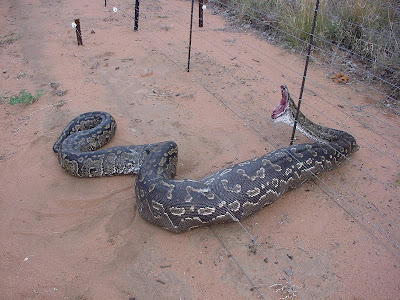
Anaconda is one of the largest snakes in the world. It is a non-venomous snake that is normally found around the Amazon River. There are several different kinds of Anacondas including the Common Anaconda (Eunectes murinus), Yellow Anaconda (Eunectes notaeus) and the Dark-Spotted Anaconda (Eunectes deschauenseei). All of these snakes crush their prey and swallow them whole. Watch just how the Anaconda hunts in the amazing video below. anaconda is a large, non-venomous snake found in tropical South America. Although the name actually applies to a group of snakes, it is often used to refer only to one species in particular, the common or green anaconda, Eunectes murinus, which is one of the largest snakes in the world.
dark spotted anaconda pics
dark spotted anaconda

dark spotted anaconda

peringuey's adder snakes pics

Peringuey's adder Peringuey's desert adder, sidewinding adder more.
Bitis peringueyi is a venomous viper species found in Namibia and southern Angola. No subspecies are currently recognized. small snake with an average length of 20–25 cm and a maximum recorded length of 32 cm.
The head is short and flat with eyes located on top of the head—an adaptation for hunting. It is covered with strongly keeled scales, the smallest of which are located anteriorly. The eyes are separated by 6-9 scales, while each is surrounded by 10-13 scales. 2-4 scales separate the suborbitals from the supralabials. The latter number 10-14, the sublabials 10-13. An ambush hunter, it buries itself just beneath the surface of the sand with only its eyes and the tip of its tail exposed (individuals with black tail-tips employ caudal luring). When prey happens by, it is seized and envenomated.
peringuey's adder
peringuey's adder
peringuey's adder
Related Posts Plugin for WordPress, Blogger...